
Bibliography
Bibliography main page; Theorizing UI; Doing UI;Types of UI; Calls to action; Barriers to UI; Proposed solutions; Funding; Critiquing DI; Who does UI; Where UI is or can be done; Being disciplined
Calls to Action
These entries state that institutions, researchers, and/or educators should do undisciplined inquiry.
Abolmaesumi, P., Black, J., Boyd, Jenkins, C., L. Kong, H., Ramana, M., Reynolds, S., Stack, M., Teves, S., and Troeung, Y-D. 2021. Chromatic: Ten Meditations on Crisis in Art and Letters. Peter Wall Institute for Advanced Studies, UBC.
Publisher Abstract: A collection of essays and illustrations as diverse as the subject of crisis itself. Imagined and brought to life by leading UBC scholars in collaboration with local artists, Chromatic asks what it means to be in crisis and grapples with the personal and societal impacts of crisis during a time of unprecedented global upheaval. Each contributor to this diverse collection takes a profoundly different approach yet fascinating and unexpected connections emerge. The result is a book that juxtaposes gorgeous, colourful artwork with writing that will surprise and challenge you, outrage and enlighten you. From a precise discussion of a nuclear crisis in Japan, to a satirical listicle about corporate academia, to an ICU doctor's poetic response to COVID-19, each contributor to this diverse collection takes a profoundly different approach to writing about crisis, yet fascinating and unexpected connections emerge.
Categories: Doing UI; Calls to action; Types of UI; Being disciplined
Atleo, E. R. / Umeek. 2005. Tsawalk: A Nuu-chah-nulth Worldview. University of British Columbia Press.
Publisher Abstract: Western philosophy has long held scientific rationalism in a place of honour. Reason, that particularly exalted human quality, has become steadily distanced from the metaphysical aspects of existence, such as spirit, faith, and intuition. In Tsawalk, hereditary chief Umeek introduces us to an alternative indigenous worldview -- an ontology drawn from the Nuu-chah-nulth origin stories. Umeek develops a theory of "Tsawalk," meaning "one," that views the nature of existence as an integrated and orderly whole, and thereby recognizes the intrinsic relationship between the physical and spiritual. By retelling and analyzing the origin stories of Son of Raven and Son of Mucus, Umeek demonstrates how Tsawalk provides a viable theoretical alternative that both complements and expands the view of reality presented by Western science. Tsawalk, he argues, allows both Western and indigenous views to be combined in order to advance our understanding of the universe. In addition, he shows how various fundamental aspects of Nuu-chah-nulth society are based upon Tsawalk, and what implications it has today for both Native and non-Native peoples. A valuable contribution to Native studies, anthropology, and philosophy, Tsawalk offers a revitalizing and thoughtful complement to Western scientific worldviews.
Categories: Calls to action; Proposed solutions; Theorizing UI; Doing UI; Critiquing DI; Barriers to UI; Where UI is or can be done
Bartlett, C., Marshall, M. & Marshall, A. 2012 Two-Eyed Seeing and other lessons learned within a co-learning journey of bringing together indigenous and mainstream knowledges and ways of knowing. J Environ Stud Sci 2, 331–340
Entry asks the question - in developing curricula that weave in indigenous ways of knowing, what can curriculum developers do to ensure that their efforts remain true to indigenous ways of knowing and indigenous knowledge systems? Entry discusses development of and problems with the Integrative Sciences, a science degree program at Cape Breton University, run by members of the Mi-Kmaw community of the Eskasoni First Nation. Authors discuss with lessons learned from their experience, including being guided by two-eyed seeing, which authors claim is their most “profound” lesson (p. 334, 335). Authors then discuss how two-eyed seeing can be pursued, and explains how two-eyed seeing as an ongoing process that enables recognition of indigenous knowledge systems. Entry then discusses how two-eyed seeing fits with broader calls for transdisciplinary research, and considers some critiques of the concept.
Categories: Theorizing UI; Doing UI; Calls to action; Proposed solutions
Burkhart, B. 2019. Indigenizing Philosophy Through the Land: a Trickster Methodology for Decolonizing Environmental Ethics and Indigenous Futures. Michigan State University Press.
Author Abstract: Land is key to the operations of coloniality, but the power of the land is also the key anticolonial force that grounds Indigenous liberation. This work is an attempt to articulate the nature of land as a material, conceptual, and ontological foundation for Indigenous ways of knowing, being, and valuing. As a foundation of valuing, land forms the framework for a conceptualization of Indigenous environmental ethics as an anticolonial force for sovereign Indigenous futures. This text is an important contribution in the efforts to Indigenize Western philosophy, particularly in the context of settler colonialism in the United States. It breaks significant ground in articulating Indigenous ways of knowing and valuing to Western philosophy—not as artifact that Western philosophy can incorporate into its canon, but rather as a force of anticolonial Indigenous liberation. Ultimately, Indigenizing Philosophy through the Land shines light on a possible road for epistemically, ontologically, and morally sovereign Indigenous futures.
Categories: Calls to action; Proposed solutions; Theorizing UI; Doing UI; Critiquing DI, Types of UI
Campbell, M. 2007 "We Need to Return to the Principles of Wahkotowin," in Eagle Feather News 10
Project Abstract: Campbell calls for Indigenous peoples to embody the principle of Wahkotowin, that is, kinship, relationship, and family with all of creation. Campbell laments the loss of this principle within Indigenous communities in Canada, and she points to some examples including the lack of safety and family support for Indigenous children, and the lack of “Indian status” for some Indigenous groups like the Lubicon Lake Cree Nation. Campbell emphasizes the importance of remembering Wahkotowin, especially for safeguarding Indigenous children.
Categories: Calls to action; Doing UI; Barriers to UI; Being disciplined; Where UI is or can be done
Fazakas, L., Cussans, J., and Hopkins, C. 2019. Beau Dick: Devoured by Consumerism. Bill Reid Gallery.
Abridged Abstract (from White Columns Gallery): “We talk about the ‘the system’. It has no face; it has no conscience either. So these forces we are up against are almost on the supernatural level. My conscience tells me we have to fight back. And in some ways it is war on another level; nonviolent, but spiritual warfare. It has come to that.” – Beau Dick, 2017. ‘Devoured by Consumerism’ includes a group of some fifteen carved and painted masks and sculptural works made by Dick between 1980 and 2016. The exhibition explores and amplifies the inherent tensions and contradictions between the Kwakwaka’wakw Winter Ceremonies and contemporary consumer culture. Writing about Dick’s intentions for ‘Devoured by Consumerism’ LaTiesha Fazakas suggests: “Through the sharing of works inspired by the Kwakwaka’wakw Winter Ceremonies, Beau Dick hoped to spark change in a world that he saw as devouring itself under the ravenous pressures of capitalism.”
Categories: Calls to action; Doing UI; Barriers to UI; Critiquing DI; Being disciplined
Leon, A., Mendes, W., and Jovel, E. 2019. “Decolonizing Framework for Land-based Pedagogies,” in Canadian Journal of Native Education 41, pp. 37-58.
Project Abstract: The entry concerns the implementation of indigenous knowledge practices and decolonization of pedagogy by the Medicine Collective and the Indigenous Health Research Education garden at UBC in Vancouver. Authors describe how sharing food and food knowledge strengthens relationships across different First Nations and strengthens potential for advocating for indigenous land-based knowledge, while operating within a colonial institution. The entry describes how the Medicine Collective implements a five-component based approach to indigenous land-based pedagogy, and describe how this approach can help “re-imagine the interconnectedness of “all my relations”” (p. 43). The entry also discusses challenges faced engaging with the ever-changing student body and staff members at UBC, as well as challenges the members of the Medicine Collective faced trying to balance their own protocols with supporting the protocols of other First Nations. Authors then suggest next steps UBC could take to integrate indigenous land-based pedagogy.
Categories: Doing UI; Proposed solutions; Calls to action
Liboiron, M. 2021. Pollution is Colonialism. Duke University Press.
Publisher Abstract: In Pollution Is Colonialism Max Liboiron presents a framework for understanding scientific research methods as practices that can align with or against colonialism. They point out that even when researchers are working toward benevolent goals, environmental science and activism are often premised on a colonial worldview and access to land. Focusing on plastic pollution, the book models an anticolonial scientific practice aligned with Indigenous, particularly Métis, concepts of land, ethics, and relations. Liboiron draws on their work in the Civic Laboratory for Environmental Action Research (CLEAR)—an anticolonial science laboratory in Newfoundland, Canada—to illuminate how pollution is not a symptom of capitalism but a violent enactment of colonial land relations that claim access to Indigenous land. Liboiron's creative, lively, and passionate text refuses theories of pollution that make Indigenous land available for settler and colonial goals. In this way, their methodology demonstrates that anticolonial science is not only possible but is currently being practiced in ways that enact more ethical modes of being in the world.
Categories: Calls to action; Theorizing UI; Doing UI; Types of UI; Where UI is or can be done
Lorde, A. 2020. The Selected Works of Audre Lorde: Edited and with an Introduction by Roxane Gay. W.W. Norton and Company.
Publisher Abstract: A definitive selection of prose and poetry from the self-described "black, lesbian, mother, warrior, poet," for a new generation of readers. Audre Lorde is an unforgettable voice in twentieth-century literature, one of the first to center the experiences of black, queer women. Her incisive essays and passionate poetry-alive with sensuality, vulnerability, and rage-remain indelible contributions to intersectional feminism, queer theory, and critical race studies. This essential reader showcases twelve landmark essays and more than sixty poems, selected and introduced by one of our most powerful contemporary voices on race and gender, Roxane Gay. The essays include "The Master's Tools Will Never Dismantle the Master's House," "I Am Your Sister," and excerpts from the National Book Award-winning A Burst of Light. The poems are drawn from Lorde's nine volumes, including National Book Award nominee The Land Where Other People Live. As Gay writes in her astute introduction, The Selected Works of Audre Lorde celebrates "an exemplar of public intellectualism who is as relevant in this century as she was in the last."
Categories: Calls to action; Doing UI; Types of UI; Critiquing DI; Being disciplined; Where UI is or can be done
Loveless, N. 2019. How to Make Art at the End of the World: A Manifesto for Research-Creation. Duke University Press.
Publisher Abstract: In recent years, the rise of research-creation—a scholarly activity that considers art practices as research methods in their own right—has emerged from the organic convergences of the arts and interdisciplinary humanities, and it has been fostered by universities wishing to enhance their public profiles. In How to Make Art at the End of the World Natalie Loveless draws on diverse perspectives—from feminist science studies to psychoanalytic theory, as well as her own experience advising undergraduate and graduate students—to argue for research-creation as both a means to produce innovative scholarship and a way to transform pedagogy and research within the contemporary neoliberal university. Championing experimental, artistically driven methods of teaching, researching, and publication, research-creation works to render daily life in the academy more pedagogically, politically, and affectively sustainable, as well as more responsive to issues of social and ecological justice.
Categories: Calls to action; Theorizing UI; Proposed solutions; Doing UI; Critiquing DI; Being disciplined; Types of UI
Ludwig, D. and El-Hani, C. 2025. Transformative Transdisciplinarity: An Introduction to Community-Based Philosophy. Oxford University Press.
Publisher Abstract: In the face of planetary crises -- from biodiversity loss to climate change to food security -- transdisciplinary methods promise effective and just responses through equal collaborations. However, transdisciplinarity also creates complex challenges by bringing together different actors with different frameworks, like scientists, Indigenous and local communities, and policy makers. Successful collaboration among such actors requires navigating different forms of knowledge, worldviews, values, and positions of power. In Transformative Transdisciplinarity, David Ludwig and Charbel N. El-Hani synthesize insights from the philosophy of science and empirical action research to address these challenges through a framework of partial overlaps. On the one hand, the framework highlights the overlapping concerns and perspectives of actors that provide common ground for collaboration and mutual understanding. On the other hand, it emphasizes partialities that require navigating differences and tensions between actors. This book addresses the fundamental epistemological, ontological, and political questions of transdisciplinarity through this framework of partial overlaps, aiming for a transformative vision of collaborative science in the face of planetary crises.
Categories: Calls to action; Critiquing DI; Barriers to UI; Theorizing UI; Proposed solutions
Maracle, L. 2015. Memory Serves. NeWest Press.
Publisher Abstract: Memory Serves gathers together the oratories award-winning author Lee Maracle has delivered and performed over a twenty-year period. Revised for publication, the lectures hold the features and style of oratory intrinsic to the Salish people in general and the Sto: lo in particular. From her Coast Salish perspective and with great eloquence, Maracle shares her knowledge of Sto: lo history, memory, philosophy, law, spirituality, feminism and the colonial condition of her people. Powerful and inspiring, Memory Serves is an extremely timely book, not only because it is the first collection of oratories by one of the most important Indigenous authors in Canada, but also because it offers all Canadians, in Maracle's own words, "another way to be, to think, to know," a way that holds the promise of a "journey toward a common consciousness."
Categories: Calls to action; Theorizing UI; Doing UI; Proposed solutions; Critiquing DI; Being disciplined; Who does UI; Where UI is or can be done
Murthy, V. 2023. “Our Epidemic of Loneliness and Isolation: The U.S. Surgeon General’s Advisory on the Healing Effects of Social Connection and Community.”https://www.hhs.gov/sites/default/files/surgeon-general-social-connection-advisory.pdf
Author Abstract: This advisory calls attention to the importance of social connection for individual health as well as on community-wide metrics of health and well-being, and conversely the significant consequences when social connection is lacking. While social connection is often considered an individual challenge, this advisory explores and explains the cultural, community, and societal dynamics that drive connection and disconnection. It also offers recommendations for increasing and strengthening social connection through a whole-of-society approach. The advisory presents a framework for a national strategy with specific recommendations for the institutions that shape our day-to-day lives: governments, health care systems and insurers, public health departments, research institutions, philanthropy, schools, workplaces, community-based organizations, technology companies, and the media.
Categories: Calls to action; Proposed solutions; Where UI is or can be done
Truth and Reconciliation Committee of Canada. 2015. Calls To Action.https://www2.gov.bc.ca/assets/gov/british-columbians-our-governments/indigenous-people/aboriginal-peoples-documents/calls_to_action_english2.pdf
Project Abstract: A list of proposals that aim to redress the legacy of the Residential School System in Canada and advance the process of Canadian reconciliation.
Categories: Calls to action; Proposed solutions
University of British Columbia. 2020. UBC Indigenous Strategic Plan.https://aboriginal-2018.sites.olt.ubc.ca/files/2021/06/UBC.ISP_StrategicPlan2020-SPREAD-Borderless-REDUCED.pdf
Project Abstract: A report detailing the steps and initiatives UBC has undertaken as part of the Canadian reconciliation process, and a plan for next steps.
Categories: Calls to action; Proposed solutions
Unveiling the Essence and Impact of Transdisciplinary Research
Undisciplined Project report from the Research on Research Institute
https://doi.org/10.6084/m9.figshare.27088756
Project Abstract: the entry investigates how research funders define UI, and looks at a variety of ways of defining UI from different funding bodies. The entry posits that “UI” is polysemous, and the authors describe 3 facets of meaning for UI: Academic/non-academic partnerships; values; and societally impactful research outcomes. The entry describes how proposals for UI research can be properly evaluated, which requires institutions to utilize mixed panels with diverse perspectives of expertise and/or stakeholders, in order to counteract biases, ensure balance, and to address power imbalances within panels. The authors also provide recommendations for how funders can support UI projects across different researchers, including providing time for partnerships to develop, providing funding for early stages of projects, and guiding and training for applicants for funding of TDR projects. The authors also discuss how when UI goes wrong, differences between participants become salient over their shared research goal(s)
Categories = Calls to action; Proposed solutions; Theorizing UI; Funding
Ward, J. 2018. “The Methods Gatekeepers and the Exiled Queers,” in D. Compton, T. Meadow and K. Schilt (ed.s)Other, Please Specify: Queer Methods in Sociology, University of California Press, pp. 51-66.
Project Abstract: in this book chapter, Ward explores the “tense but dynamic relationship between sociological methods and queer methods” via an ethnography of their own career trajectory. Ward takes the term “mansplaining” and expands it to capture another form of epistemic arrogance, methodsplaining. Ward explains how queer, trans, and sociologists from other underrepresented groups are often met with skepticism that their methodologies are not “proper sociology.” Ward then details how this supposedly neutral and objective critique is inseparable from conservative political agendas. The result is queer scholars are exiled from sociology.
Categories: Calls to action; Theorizing UI; Critiquing DI; Barriers to UI; Types of UI; Who does UI; Being disciplined
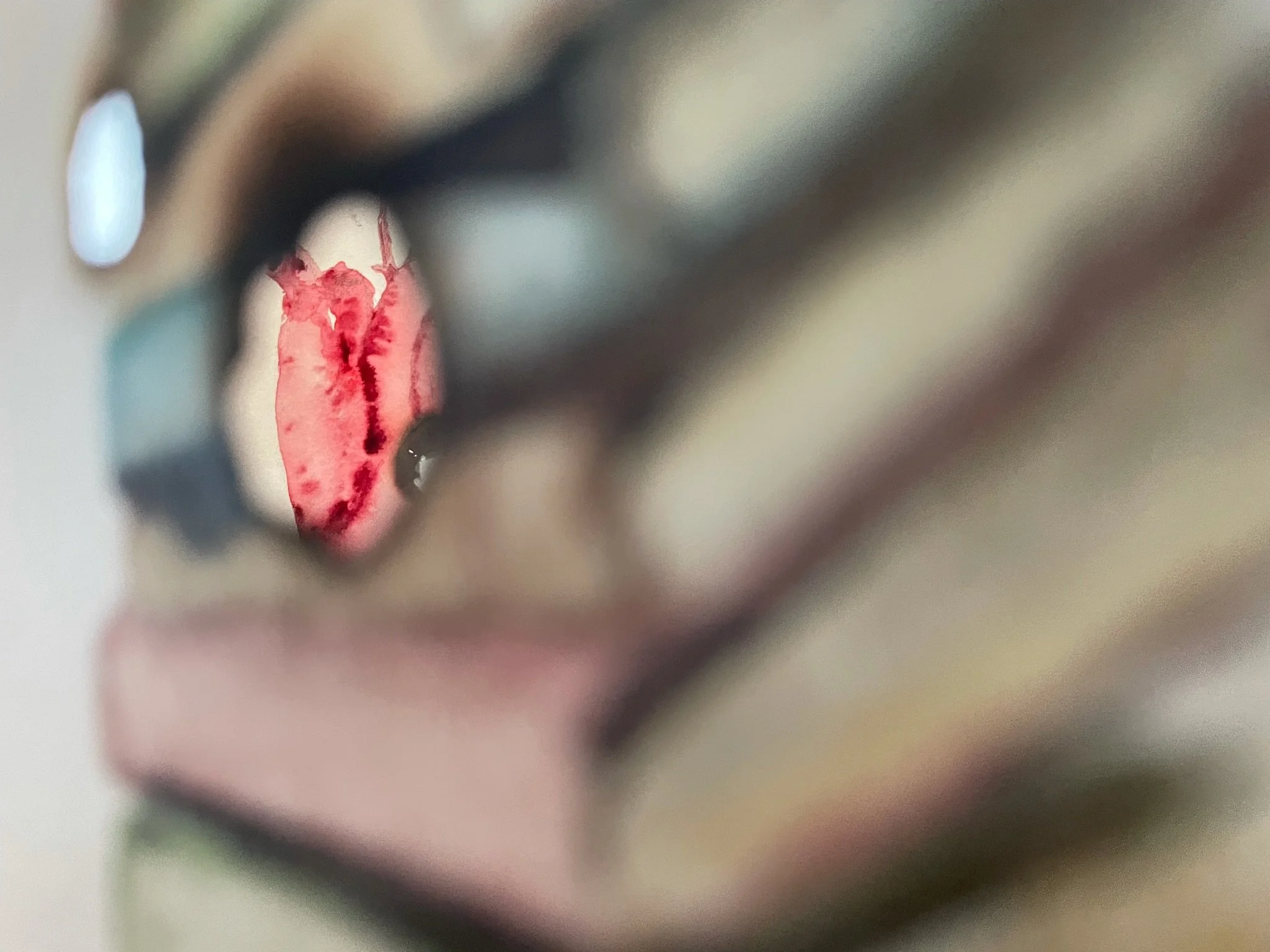
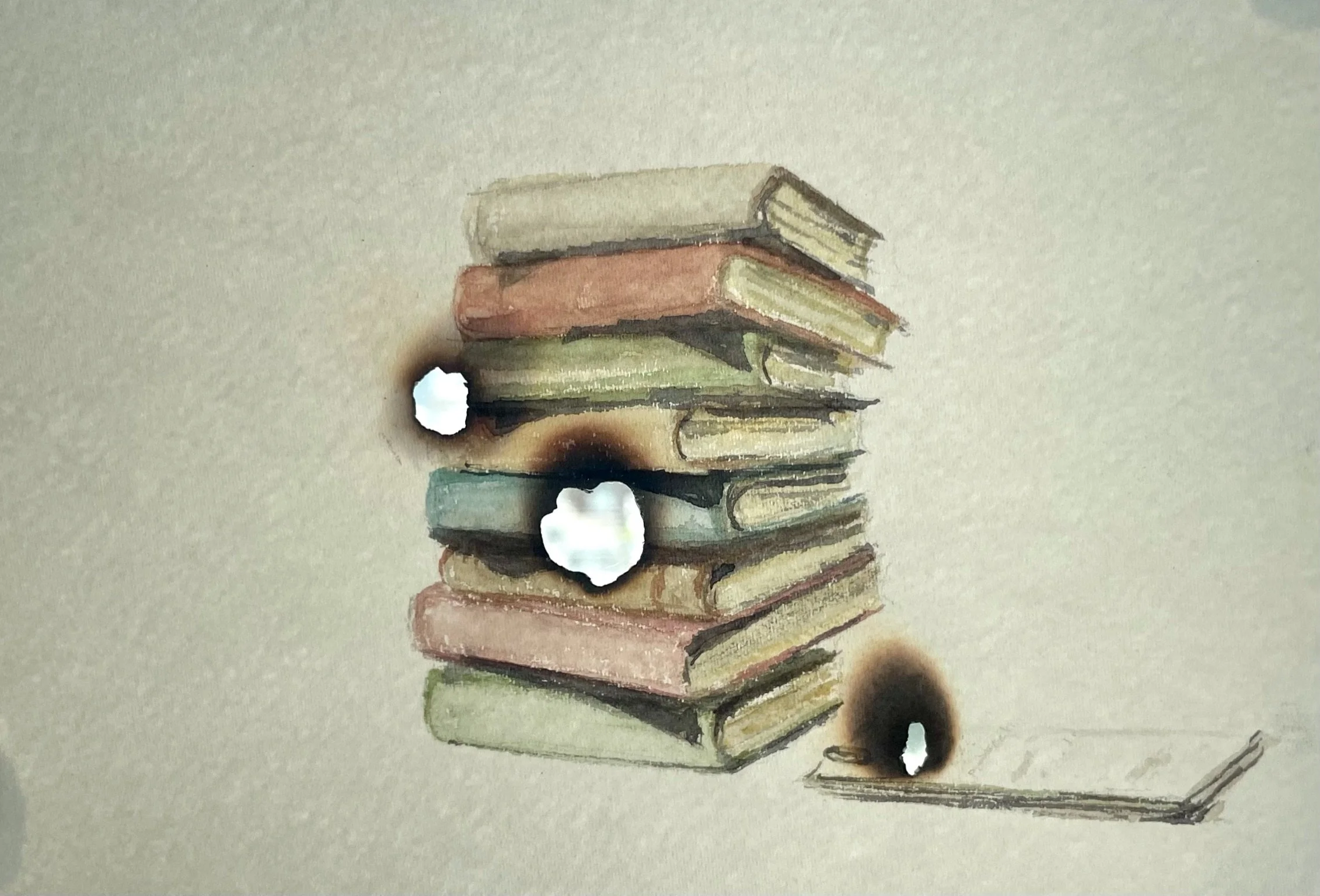
Image from Beaver Bentwood Box by Robin Roberts
Image from Burned Out Again by Carrie Jenkins, photography by Jonathan Ichikawa