
Bibliography
Bibliography main page; Theorizing UI; Doing UI;Types of UI; Calls to action; Barriers to UI; Proposed solutions; Funding; Critiquing DI; Who does UI; Where UI is or can be done; Being disciplined
Doing Undisciplined Inquiry
These entries are examples of doing undisciplined inquiry.
Abel, J. 2013. The Place of Scraps. Talonbooks.
Publisher Abstract: The Place of Scraps revolves around Marius Barbeau, an early-twentieth-century ethnographer, who studied many of the First Nations cultures in the Pacific Northwest, including Jordan Abel's ancestral Nisga'a Nation. Barbeau, in keeping with the popular thinking of the time, believed First Nations cultures were about to disappear completely, and that it was up to him to preserve what was left of these dying cultures while he could. Unfortunately, his methods of preserving First Nations cultures included purchasing totem poles and potlatch items from struggling communities in order to sell them to museums. While Barbeau strove to protect First Nations cultures from vanishing, he ended up playing an active role in dismantling the very same cultures he tried to save. Drawing inspiration from Barbeau's canonical book Totem Poles, Jordan Abel explores the complicated relationship between First Nations cultures and ethnography. His poems simultaneously illuminate Barbeau's intentions and navigate the repercussions of the anthropologist's actions. Through the use of erasure techniques, Abel carves out new understandings of Barbeau's writing - each layer reveals a fresh perspective, each word takes on a different connotation, each letter plays a different role, and each punctuation mark rises to the surface in an unexpected way. As Abel writes his way ever deeper into Barbeau's words, he begins to understand that he is much more connected to Barbeau than he originally suspected.
Categories: Doing UI; Barriers to UI; Where UI is or can be done
Abel, J. 2015. Un/Inhabited. Project Space Press / Talonbooks.
Publisher Abstract: Award-winning Nisga’a poet Jordan Abel’s second collection of poetry, Un/inhabited, maps the terrain of the public domain to create a layered investigation of the interconnections between language and land. Abel constructed the book’s source text by compiling in their entirety ninety-one western novels found on the website Project Gutenberg, an online archive of works whose copyright has expired. Using his word processor’s Ctrl-F function, he searched the compilation for words that relate to the political and social aspects of land, territory, and ownership. Each search query represents a study in context (How was this word deployed? What surrounded it? What is left over once that word is removed?) accumulating toward a representation of the public domain as a discoverable and inhabitable body of land. Featuring a text by independent curator Kathleen Ritter – the first piece of scholarship on Abel’s work – Un/inhabited reminds us of the power of language as material and invites us to reflect on what is present in the empty space when we see nothing.
Categories: Doing UI; Critiquing DI; Where UI is or can be done
Abel, J. 2016. Injun. Talonbooks.
Publisher Abstract: Award-winning Nisga’a poet Jordan Abel’s third collection, Injun, is a long poem about racism and the representation of indigenous peoples. Composed of text found in western novels published between 1840 and 1950 – the heyday of pulp publishing and a period of unfettered colonialism in North America – Injun then uses erasure, pastiche, and a focused poetics to create a visually striking response to the western genre. After compiling the online text of 91 of these now public-domain novels into one gargantuan document, Abel used his word processor’s “Find” function to search for the word “injun.” The 509 results were used as a study in context: How was this word deployed? What surrounded it? What was left over once that word was removed? Abel then cut up the sentences into clusters of three to five words and rearranged them into the long poem that is Injun. The book contains the poem as well as peripheral material that will help the reader to replicate, intuitively, some of the conceptual processes that went into composing the poem. Though it has been phased out of use in our “post-racial” society, the word “injun” is peppered throughout pulp western novels. Injun retraces, defaces, and effaces the use of this word as a colonial and racial marker. While the subject matter of the source text is clearly problematic, the textual explorations in Injun help to destabilize the colonial image of the “Indian” in the source novels, the western genre as a whole, and the Western canon.
Categories: Doing UI; Critiquing DI; Where UI is or can be done
Abel, J. 2021. Nishga. McClelland and Stewart.
Publisher Abstract: As a Nisga'a writer, Jordan Abel often finds himself in a position where he is asked to explain his relationship to Nisga'a language, Nisga'a community, and Nisga'a cultural knowledge. However, as an intergenerational survivor of residential school--both of his grandparents attended the same residential school--his relationship to his own Indigenous identity is complicated to say the least. NISHGA explores those complications and is invested in understanding how the colonial violence originating at the Coqualeetza Indian Residential School impacted his grandparents' generation, then his father's generation, and ultimately his own. The project is rooted in a desire to illuminate the realities of intergenerational survivors of residential school, but sheds light on Indigenous experiences that may not seem to be immediately (or inherently) Indigenous. Drawing on autobiography and a series of interconnected documents (including pieces of memoir, transcriptions of talks, and photography), NISHGA is a book about confronting difficult truths and it is about how both Indigenous and non-Indigenous peoples engage with a history of colonial violence that is quite often rendered invisible.
Categories: Doing UI; Critiquing DI; Being disciplined; Where UI is or can be done
Abel, J. 2023. Empty Spaces. McClelland and Stewart.
Publisher Abstract: Reimagining James Fenimore Cooper’s nineteenth-century text The Last of the Mohicans from the contemporary perspective of an urban Nisga’a person whose relationship to land and traditional knowledge was severed by colonial violence, Jordan Abel explores what it means to be Indigenous without access to familial territory and complicates popular understandings about Indigenous storytelling. Engaging the land through fiction and metaphor, the successive chapters of Empty Spaces move toward an eerie, looping, and atmospheric rendering of place that evolves despite the violent and reckless histories of North America. The result is a bold and profound new vision of history that decenters human perception and forgoes Westernized ways of seeing. Jordan Abel’s extraordinary debut work of fiction grows out of his groundbreaking visual compositions in NISHGA, which integrated descriptions of the landscape from Cooper’s settler classicinto his father's traditional Nisga'a artwork. In Empty Spaces, Abel reinscribes those words on the page itself, subjecting them to bold rewritings and inviting us to come to a crucial understanding: that the land knows everything that can and will happen, even as our world lurches toward uncertainty.
Categories: Doing UI; Being disciplined
Abolmaesumi, P., Black, J., Boyd, Jenkins, C., L. Kong, H., Ramana, M., Reynolds, S., Stack, M., Teves, S., and Troeung, Y-D. 2021. Chromatic: Ten Meditations on Crisis in Art and Letters. Peter Wall Institute for Advanced Studies, UBC.
Publisher Abstract: A collection of essays and illustrations as diverse as the subject of crisis itself. Imagined and brought to life by leading UBC scholars in collaboration with local artists, Chromatic asks what it means to be in crisis and grapples with the personal and societal impacts of crisis during a time of unprecedented global upheaval. Each contributor to this diverse collection takes a profoundly different approach yet fascinating and unexpected connections emerge. The result is a book that juxtaposes gorgeous, colourful artwork with writing that will surprise and challenge you, outrage and enlighten you. From a precise discussion of a nuclear crisis in Japan, to a satirical listicle about corporate academia, to an ICU doctor's poetic response to COVID-19, each contributor to this diverse collection takes a profoundly different approach to writing about crisis, yet fascinating and unexpected connections emerge.
Categories: Doing UI; Calls to action; Types of UI; Being disciplined
Archibald, J.-A. 2008. Indigenous Storywork. University of British Columbia Press.
Publisher Abstract: Indigenous oral narratives are an important source for, and component of, Coast Salish knowledge systems. Stories are not only to be recounted and passed down; they are also intended as tools for teaching. Jo-ann Archibald worked closely with Elders and storytellers, who shared both traditional and personal life-experience stories, in order to develop ways of bringing storytelling into educational contexts. Indigenous Storywork is the result of this research and it demonstrates how stories have the power to educate and heal the heart, mind, body, and spirit. It builds on the seven principles of respect, responsibility, reciprocity, reverence, holism, interrelatedness, and synergy that form a framework for understanding the characteristics of stories, appreciating the process of storytelling, establishing a receptive learning context, and engaging in holistic meaning-making.
Categories: Theorizing UI; Doing UI; Types of UI; Proposed solutions; Where UI is or can be done
Atleo, E. R. / Umeek. 2005. Tsawalk: A Nuu-chah-nulth Worldview. University of British Columbia Press.
Publisher Abstract: Western philosophy has long held scientific rationalism in a place of honour. Reason, that particularly exalted human quality, has become steadily distanced from the metaphysical aspects of existence, such as spirit, faith, and intuition. In Tsawalk, hereditary chief Umeek introduces us to an alternative indigenous worldview -- an ontology drawn from the Nuu-chah-nulth origin stories. Umeek develops a theory of "Tsawalk," meaning "one," that views the nature of existence as an integrated and orderly whole, and thereby recognizes the intrinsic relationship between the physical and spiritual. By retelling and analyzing the origin stories of Son of Raven and Son of Mucus, Umeek demonstrates how Tsawalk provides a viable theoretical alternative that both complements and expands the view of reality presented by Western science. Tsawalk, he argues, allows both Western and indigenous views to be combined in order to advance our understanding of the universe. In addition, he shows how various fundamental aspects of Nuu-chah-nulth society are based upon Tsawalk, and what implications it has today for both Native and non-Native peoples. A valuable contribution to Native studies, anthropology, and philosophy, Tsawalk offers a revitalizing and thoughtful complement to Western scientific worldviews.
Categories: Calls to action; Proposed solutions; Theorizing UI; Doing UI; Critiquing DI; Barriers to UI; Where UI is or can be done
Bartlett, C., Marshall, M. & Marshall, A. 2012 Two-Eyed Seeing and other lessons learned within a co-learning journey of bringing together indigenous and mainstream knowledges and ways of knowing. J Environ Stud Sci 2, 331–340
Project Abstract: This article asks the question, in developing curricula that weave in indigenous ways of knowing, what can curriculum developers do to ensure that their efforts remain true to indigenous ways of knowing and indigenous knowledge systems? Entry discusses development of and problems with the Integrative Sciences, a science degree program at Cape Breton University, run by members of the Mi-Kmaw community of the Eskasoni First Nation. Authors discuss with lessons learned from their experience, including being guided by two-eyed seeing, which authors claim is their most “profound” lesson (p. 334, 335). Authors then discuss how two-eyed seeing can be pursued, and explains how two-eyed seeing as an ongoing process that enables recognition of indigenous knowledge systems. Entry then discusses how two-eyed seeing fits with broader calls for transdisciplinary research, and considers some critiques of the concept.
Categories: Theorizing UI; Doing UI; Calls to action; Proposed solutions
de Beauvoir, S. 1949. The Second Sex. Trans. C. Borde and S. Mallovany-Chevallier. Edn. of 2011. Vintage.
Project Abstract: A foundational text of feminist theory in which de Beauvoir explains how women are socially constructed as Others within patriarchal society. In this work, and by drawing from existentialism, phenomenology, sociology, and history, de Beauvoir develops and utilizes a method of feminist inquiry that explored women’s oppression and unfreedom under patriarchy.
Categories: Doing UI; Critiquing DI; Who does UI; Being disciplined
Blackburn, S. 2015. “Can an Analytic Philosopher Read Poetry?” in J. Gibson (ed.) The Philosophy of Poetry, Oxford University Press, pp. 111–126.
Author Abstract: This chapter offers a tongue-in-cheek indictment of analytic philosophy for providing us with philosophical resources too impoverished to be capable of making sense of the poetic use of language and its significance in human life. The contemporary philosopher’s Fregean inheritance, concerned as it is with truth and reference—poems can appear to have neither—make it very difficult to acknowledge the philosophical, moral, and cultural value of the poet’s labour. The chapter shows that the matter is not as bleak as it seems, but there are concerns dear to many philosophers that reveal them to have a radically different set of expectations about language than the poet does. In respect to the ancient feud, the chapter ultimately concludes that it is the poet’s sensitivity to language that has the greater claim to being ‘our best guide to who we are, and even to where we ought to be heading’.
Categories: Doing UI; Barriers to UI
Burkhart, B. 2019. Indigenizing Philosophy Through the Land: a Trickster Methodology for Decolonizing Environmental Ethics and Indigenous Futures. Michigan State University Press.
Author Abstract: Land is key to the operations of coloniality, but the power of the land is also the key anticolonial force that grounds Indigenous liberation. This work is an attempt to articulate the nature of land as a material, conceptual, and ontological foundation for Indigenous ways of knowing, being, and valuing. As a foundation of valuing, land forms the framework for a conceptualization of Indigenous environmental ethics as an anticolonial force for sovereign Indigenous futures. This text is an important contribution in the efforts to Indigenize Western philosophy, particularly in the context of settler colonialism in the United States. It breaks significant ground in articulating Indigenous ways of knowing and valuing to Western philosophy—not as artifact that Western philosophy can incorporate into its canon, but rather as a force of anticolonial Indigenous liberation. Ultimately, Indigenizing Philosophy through the Land shines light on a possible road for epistemically, ontologically, and morally sovereign Indigenous futures.
Categories: Calls to action; Proposed solutions; Theorizing UI; Doing UI; Critiquing DI, Types of UI
Campbell, M. 2007 "We Need to Return to the Principles of Wahkotowin," in Eagle Feather News 10
Project Abstract: Campbell calls for Indigenous peoples to embody the principle of Wahkotowin, that is, kinship, relationship, and family with all of creation. Campbell laments the loss of this principle within Indigenous communities in Canada, and she points to some examples including the lack of safety and family support for Indigenous children, and the lack of “Indian status” for some Indigenous groups like the Lubicon Lake Cree Nation. Campbell emphasizes the importance of remembering Wahkotowin, especially for safeguarding Indigenous children.
Categories: Calls to action; Doing UI; Barriers to UI; Being disciplined; Where UI is or can be done
Carson, A. 1986. Eros the Bittersweet: An Essay. Princeton University Press.
Publisher Abstract: Since it was first published, Eros the Bittersweet, Anne Carson’s lyrical meditation on love in ancient Greek literature and philosophy, has established itself as a favorite among an unusually broad audience, including classicists, essayists, poets, and general readers. Beginning with the poet Sappho’s invention of the word “bittersweet” to describe Eros, Carson’s original and beautifully written book is a wide-ranging reflection on the conflicted nature of romantic love, which is both “miserable” and “one of the greatest pleasures we have.”
Categories: Doing UI
Carson, A. 1998. Autobiography of Red: A Novel in Verse. Alfred A. Knopf.
Publisher Abstract: The award-winning poet reinvents a genre in a stunning work that is both a novel and a poem, both an unconventional re-creation of an ancient Greek myth and a wholly original coming-of-age story set in the present. Geryon, a young boy who is also a winged red monster, reveals the volcanic terrain of his fragile, tormented soul in an autobiography he begins at the age of five. As he grows older, Geryon escapes his abusive brother and affectionate but ineffectual mother, finding solace behind the lens of his camera and in the arms of a young man named Herakles, a cavalier drifter who leaves him at the peak of infatuation. When Herakles reappears years later, Geryon confronts again the pain of his desire and embarks on a journey that will unleash his creative imagination to its fullest extent. By turns whimsical and haunting, erudite and accessible, richly layered and deceptively simple, Autobiography of Red is a profoundly moving portrait of an artist coming to terms with the fantastic accident of who he is.
Categories: Doing UI
Davies, T., Isakjee, A., and Obradovic-Wochnik, J. 2022. “Epistemic Borderwork: Violent Pushbacks, Refugees, and the Politics of Knowledge at the EU Border,” in Annals of the American Association of Geographers 113, pp. 1-20.
Author Abstract: Borders are sites of epistemic struggle. Focusing on the illegal tactic of the “pushback,” which is routinely deployed by state authorities to forcefully expel asylum seekers from European Union territory without due process, this article explores the uneven politics of knowledge that helps to support or unsettle this clandestine border violence. Drawing on long-term qualitative research on the Croatia–Bosnia border, including interviews with pushback survivors and activists, as well as a database of border violence reports, we explore the competing truth claims and epistemologies that help to conceal, or counter, the pushback regime. Informed by postcolonial perspectives and contributing to political geographies of violence, we argue that “epistemic violence” (Spivak 1988) is a central feature of contemporary borders. We propose that epistemic borderwork is regularly used by state authorities to silence unwanted voices, undermine insurgent perspectives, and stifle the capacity of refugees to draw attention to their own mistreatment. In opposition to this injustice, activists are documenting, mapping, and archiving pushback survivor testimony to construct a counternarrative of refusal, which subverts the harmful knowledge claims of state authorities. In doing so, refugees and activists create epistemic friction, which helps to resist the ontological violence of borders, and “pushes back” against the pushback regime.
Categories: Theorizing UI; Doing UI; Barriers to UI
Descartes, R. 1641. Meditations on First Philosophy in Which the Existence of God and the Distinction of the Soul from the Body are Demonstrated. Trans. D. Cress. 3rd edn. Hackett.
Project Abstract: Descartes’s Meditations showcases Descartes breaking with the then-standard form of scholarly treatise. A typical treatise would consist in presenting the various sides to a disputation, and would cite accepted definitions and established authorities. Descartes does none of this, and is critical of this approach. He insists that a meditative approach is required if we are to avoid reproducing our biases and assumptions.
Categories: Doing UI; Critiquing DI; Types of UI
Diatta, M. 2023. “Undisciplining Who We Bring to the Academic Table: Practical Tactics to Accompany Critical Creative Inquiry,” in Parse 17.https://parsejournal.com/article/undisciplining-who-we-bring-to-the-academic-table
Project Abstract: In this article Diatta discusses undisciplined inquiry and creative practices in the context of citation practices, and asks, how can we repurpose creative practice towards the specific aim of undisciplining? Diatta pursues this question in order to challenge the traditional expectations that academic work arises from a literature review, is produced through a specific methodology, and contributes knowledge to a specific field or discipline. Diatta also gives an account of undisciplining, saying that “I use the term undisciplining to mean “a liberating act of temporarily suspending disciplinary regimes and practices in order to develop creative research (questions, ideas, and approaches)”.” Diatta disinguishes undisciplined inquiry from transdisciplinary inquiry, saying that what characterizes the former is “a fundamentally interior, critical, dark, disorderly place that makes it possible to imagine movements otherwise.”
Categories: Theorizing UI; Doing UI; Where UI is or can be done
Dotson, K. 2012. “How is This Paper Philosophy?” in Comparative Philosophy 3, pp. 3-29.
Author Abstract: This paper answers a call made by Anita Allen to genuinely assess whether the field of philosophy has the capacity to sustain the work of diverse peoples. By identifying a pervasive culture of justification within professional philosophy, I gesture to the ways professional philosophy is not an attractive working environment for many diverse practitioners. As a result of the downsides of the culture of justification that pervades professional philosophy, I advocate that the discipline of professional philosophy be cast according to a culture of praxis. Finally, I provide a comparative exercise using Graham Priest’s definition of philosophy and Audre Lorde’s observations of the limitations of philosophical theorizing to show how these two disparate accounts can be understood as philosophical engagement with a shift to a culture of praxis perspective.
Categories: Critiquing DI; Barriers to UI, Doing UI
Fazakas, L., Cussans, J., and Hopkins, C. 2019. Beau Dick: Devoured by Consumerism. Bill Reid Gallery.
Abridged Abstract (from White Columns Gallery): “We talk about the ‘the system’. It has no face; it has no conscience either. So these forces we are up against are almost on the supernatural level. My conscience tells me we have to fight back. And in some ways it is war on another level; nonviolent, but spiritual warfare. It has come to that.” – Beau Dick, 2017. ‘Devoured by Consumerism’ includes a group of some fifteen carved and painted masks and sculptural works made by Dick between 1980 and 2016. The exhibition explores and amplifies the inherent tensions and contradictions between the Kwakwaka’wakw Winter Ceremonies and contemporary consumer culture. Writing about Dick’s intentions for ‘Devoured by Consumerism’ LaTiesha Fazakas suggests: “Through the sharing of works inspired by the Kwakwaka’wakw Winter Ceremonies, Beau Dick hoped to spark change in a world that he saw as devouring itself under the ravenous pressures of capitalism.”
Categories: Calls to action; Doing UI; Barriers to UI; Critiquing DI; Being disciplined
Frankl, V. 1946. Man’s Search for Meaning. Part I Trans. Ilse Lasch. Edn. of 2006. Beacon Press.
Publisher Abstract: Psychiatrist Viktor Frankl's memoir has riveted generations of readers with its descriptions of life in Nazi death camps and its lessons for spiritual survival. Between 1942 and 1945 Frankl labored in four different camps, including Auschwitz, while his parents, brother, and pregnant wife perished. Based on his own experience and the experiences of others he treated later in his practice, Frankl argues that we cannot avoid suffering but we can choose how to cope with it, find meaning in it, and move forward with renewed purpose. Frankl's theory-known as logotherapy, from the Greek word logos ("meaning")-holds that our primary drive in life is not pleasure, as Freud maintained, but the discovery and pursuit of what we personally find meaningful.
Categories: Being disciplined; Theorizing UI; Doing UI
Frantz, J. and Grosse, S. (Producers), Gwaai Edenshaw and Helen Haig-Brown (Directors). 2018. SG̲aawaay Ḵ’uuna. Niijang Xyaalas Productions.
Abridged Abstract (from The Bows Gallery): Set in the Haida Gwaii region in the 19th century, the film adapts a classic Haida folk tale of a man left for dead in the forest who becomes the Gaagiid/Gaagiixiid (Wildman). After an accident where he is separated from his family, Adiits’ii wanders through the forest becoming driven mad by both natural and supernatural forces. As his loved ones, including best friend Kwa, set out to capture and cure him, Adiits’ii grows increasingly feral. More broadly, the film aims to tell a Haida story, in and about ancestral Haida lands. As Edenshaw notes: “something that people don’t know is that Gaagiixid is a real thing. It’s something that happens to people; you can, if you are exposed to the elements, easily and quickly slip into that state of being. I think that people are familiar with Gaagiixid as a monster story or something like that, but really, it’s about what’s going on inside of the person who is the monster—not so much anybody else being threatened by them.”
Categories: Doing UI; Types of UI
Jenkins, C. 2017. What Love Is and What It Could Be. Basic Books.
Author Abstract: Based on the work of theMetaphysics of Love Project, this book unpicks the conceptual, ideological, and metaphysical tangles that get in the way of understanding what love is. What Love Is And What It Could Be explores different disciplinary perspectives on love, in search of the bigger picture. It presents a "dual-nature" theory: romantic love is simultaneously both a biological phenomenon and a social construct. The deep motivation behind this work is that we have a collective responsibility to figure out romantic love. It is a formidable and potentially dangerous force, its power underwritten by its twin footholds in our biological natures and in our most treasured social practices. Often we pretend that it is incomprehensible and out of control, but this is a way of abdicating our responsibility to understand love and fix it when it's broken. What Love Is And What It Could Be explains that romantic love is currently broken in multiple interlocking ways, but also that we can change this status quo. Once we understand what love is, we will be able to take control of what it could be.
Categories: Doing UI; Critiquing DI; Being Disciplined; Where UI is or can be done
Jenkins, C. 2018. “All Hearts In Love Use Their Own Tongues: Concepts, Verbal Disputes, and Disagreeing about Love,” in A. Martin (ed.) The Routledge Handbook of Love In Philosophy, London: Routledge, pp. 72-82.
Author Abstract: In this chapter, I consider two-party disputes of the following form:
A: X is a case of romantic love.
B: X is not a case of romantic love.
I explore the possibility and significance of diagnosing a merely verbal dispute in such situations. First I suggest that this is indeed quite a plausible diagnosis in many cases, where the disputants appear to deploy different concepts of romantic love. I go on to argue that such disputes may furthermore be classified as (what I have elsewhere called) serious verbal disputes, if one of the concepts in question is flawed, failing to accurately map reality, and hence potentially serving to create and sustain forms of injustice and oppression.
Categories: Doing UI
Jenkins, C. 2022a. Sad Love: Romance and the Search for Meaning. Polity.
Author Abstract: What if your happy ever after … isn’t? This book is about sad love. Or, more accurately, it is about eudaimonic love, which has room for the full gamut of human experiences, both “positive” and “negative.” Eudaimonia, in the old sense (older than Aristotle!), was about benevolent spirits. In a contemporary setting, I frame eudaimonia in terms of how we are influenced by the people, environments, communities, and networks around us. As I see it, a proper understanding of eudaimonia demands that we take into account the deep and dramatic implications of our interconnectedness: we find meaning in collaboration and creation, and meaning is what makes life worth living for us. Eudaimonic love is collaborative, creative, and dynamic. It grows and changes. It orients us towards living a meaningful life, but away from the “pursuit of happiness,” including the romantic “happy ever after.” When we centre eudaimonia rather than romance, we can see why sad love is not necessarily a failure condition. Sadness – and other “negative” emotions – can be a legitimate part of a meaningful love story. Sad Love furthers the work of What Love Is in critiquing and dethroning culturally dominant romantic ideologies of love, especially the idea that love is defined by certain kinds of feelings. I have stopped asking how to be happy ever after in love. That question doesn’t interest me anymore.
Categories: Doing UI; Critiquing DI; Being Disciplined; Where UI is or can be done
Jenkins, C. 2023. Nonmonogamy and Happiness. Thornapple Press.
Author Abstract: The love story we’re all familiar with ends with “ … and they lived happily ever after.” But how often do we hear a nonmonogamous love story with that ending? In all kinds of contexts, nonmonogamous happiness is erased. From the ubiquitous “friend who tried it once and it didn’t end well” to Dan Savage’s long-term jokes about never being invited to a polyamorous third wedding anniversary, we are repeatedly assured that nonmonogamy leads to misery. In “real” love, we are taught to expect the opposite: to expect happiness. When we want to ask if someone’s relationship is going well, we ask if they are “happy with” their partner. We might even ask whether their partner makes them happy. But what does love have to do with happiness? Doesn’t love have space to accommodate the full range of emotional experience? Carrie Jenkins thinks it does, or at least it can. She draws connections between the expectation that love will make us happy and the undue focus on positive emotions to the exclusion of “negative” ones. She argues that love—monogamous or otherwise—might better aim at being eudaimonic than at being happy, and that we have a better chance of achieving this if we are able to make relationship choices free from the prejudices and distortions that lead to an unduly rosy view of monogamy and an unduly miserable picture of the alternatives.
Categories: Doing UI; Critiquing DI; Being Disciplined; Where UI is or can be done
Jenkins, C. and Nappi, C. 2020. Uninvited: Talking Back to Plato. McGill-Queen’s University Press.
Author Abstract: Plato’s Symposium depicts a group of men giving a series of speeches about the nature of love, with themes ranging from religion and metaphysics to medicine and pregnancy. The lone woman in the room, a “flute girl,” is sent away as the discussion turns to serious matters; at the same time, the wisest of the men attributes his theories to a woman, the possibly fictional Diotima. Despite their absence from this important intellectual exchange, women are part of Symposium. What can contemporary feminist readers do with this troubling yet immeasurably influential work? In Uninvited historian Carla Nappi and philosopher Carrie Jenkins talk back to Plato in poetry, inspired by the voices of women who were not permitted to speak in their own lifetimes. Images and ideas from Symposium are refracted through multiple lenses to reveal a tumult of mystical, intellectual, pedagogical, and sexual ideologies. Sometimes beautiful, sometimes horrific, these poems dance within and between the lines of Symposium, carving space for new kinds of conversations about love, with themes ranging from gender and voice to power and violence. Designed to be read with or without prior knowledge of Plato, this book invites the uninvited to join a strange, amorphous, and unending conversation on the nature of love and desire - and on the possibilities intellectual and creative activity can offer.
Categories: Being Disciplined; Doing UI; Critiquing DI
Khan, S. 2022. “Becoming Undisciplined: Disciplinary and Disciplining Norms” in ASAP review.https://asapjournal.com/node/becoming-undisciplined-disciplinary-and-disciplining-norms-sanaa-khan/
Project Abstract: Using excerpts from her personal journal, correspondence with friends, and correspondence with university administrators, Khan explores her experience of being disciplined into following the norms of (colonial) academia and the expectation that she submit to those norms. Khan considers how the process of becoming disciplined is detrimental to her health, and how becoming undisciplined is necessary for her survival.
Categories: Doing UI; Critiquing DI; Barriers to UI; Who does UI; Being disciplined
Kimmerer, R. W. 2013. Braiding Sweetgrass. Indigenous Wisdom, Scientific Knowledge, and the Teachings of Plants. Milkweed Editions.
Publisher Abstract: An inspired weaving of indigenous knowledge, plant science, and personal narrative from a distinguished professor of science and a Native American whose previous book, Gathering Moss, was awarded the John Burroughs Medal for outstanding nature writing. As a botanist and professor of plant ecology, Robin Wall Kimmerer has spent a career learning how to ask questions of nature using the tools of science. As a Potawatomi woman, she learned from elders, family, and history that the Potawatomi, as well as a majority of other cultures indigenous to this land, consider plants and animals to be our oldest teachers. In Braiding Sweetgrass, Kimmerer brings these two lenses of knowing together to reveal what it means to see humans as "the younger brothers of creation." As she explores these themes she circles toward a central argument: the awakening of a wider ecological consciousness requires the acknowledgement and celebration of our reciprocal relationship with the world. Once we begin to listen for the languages of other beings, we can begin to understand the innumerable life-giving gifts the world provides us and learn to offer our thanks, our care, and our own gifts in return.
Categories: Proposed solutions; Doing UI; Types of UI; Who does UI; Where UI is or can be done; Barriers to UI
Kimmerer, R. W. 2022. “The Serviceberry: An Economy of Abundance,” in Emergence Magazine.
Author Abstract: As Robin Wall Kimmerer harvests serviceberries alongside the birds, she considers the ethic of reciprocity that lies at the heart of the gift economy. How, she asks, can we learn from Indigenous wisdom and ecological systems to reimagine currencies of exchange?
Categories: Theorizing UI; Doing UI; Barriers to UI; Types of UI
King, T. 2003. The Truth About Stories: A Native Narrative. House of Anansi Press. Also available asaudio lectures.
Publisher Abstract: "Stories are wondrous things. And they are dangerous." In The Truth About Stories, Native novelist and scholar Thomas King explores how stories shape who we are and how we understand and interact with other people. From creation stories to personal experiences, historical anecdotes to social injustices, racist propaganda to works of contemporary Native literature, King probes Native culture's deep ties to storytelling. With wry humor, King deftly weaves events from his own life as a child in California, an academic in Canada, and a Native North American with a wide-ranging discussion of stories told by and about Indians. So many stories have been told about Indians, King comments, that "there is no reason for the Indian to be real. The Indian simply has to exist in our imaginations." That imaginative Indian that North Americans hold dear has been challenged by Native writers - N. Scott Momaday, Leslie Marmon Silko, Louis Owens, Robert Alexie, and others - who provide alternative narratives of the Native experience that question, create a present, and imagine a future. King reminds the reader, Native and non-Native, that storytelling carries with it social and moral responsibilties. "Don't say in the years to come that you would have lived your life differently if only you had heard this story. You've heard it now."
Categories: Theorizing UI; Doing UI; Being disciplined
Leon, A., Mendes, W., and Jovel, E. 2019. “Decolonizing Framework for Land-based Pedagogies,” in Canadian Journal of Native Education 41, pp. 37-58.
Project Abstract: The entry concerns the implementation of indigenous knowledge practices and decolonization of pedagogy by the Medicine Collective and the Indigenous Health Research Education garden at UBC in Vancouver. Authors describe how sharing food and food knowledge strengthens relationships across different First Nations and strengthens potential for advocating for indigenous land-based knowledge, while operating within a colonial institution. The entry describes how the Medicine Collective implements a five-component based approach to indigenous land-based pedagogy, and describe how this approach can help “re-imagine the interconnectedness of “all my relations”” (p. 43). The entry also discusses challenges faced engaging with the ever-changing student body and staff members at UBC, as well as challenges the members of the Medicine Collective faced trying to balance their own protocols with supporting the protocols of other First Nations. Authors then suggest next steps UBC could take to integrate indigenous land-based pedagogy.
Categories: Doing UI; Proposed solutions; Calls to action
Liboiron, M. 2021. Pollution is Colonialism. Duke University Press.
Publisher Abstract: In Pollution Is Colonialism Max Liboiron presents a framework for understanding scientific research methods as practices that can align with or against colonialism. They point out that even when researchers are working toward benevolent goals, environmental science and activism are often premised on a colonial worldview and access to land. Focusing on plastic pollution, the book models an anticolonial scientific practice aligned with Indigenous, particularly Métis, concepts of land, ethics, and relations. Liboiron draws on their work in the Civic Laboratory for Environmental Action Research (CLEAR)—an anticolonial science laboratory in Newfoundland, Canada—to illuminate how pollution is not a symptom of capitalism but a violent enactment of colonial land relations that claim access to Indigenous land. Liboiron's creative, lively, and passionate text refuses theories of pollution that make Indigenous land available for settler and colonial goals. In this way, their methodology demonstrates that anticolonial science is not only possible but is currently being practiced in ways that enact more ethical modes of being in the world.
Categories: Calls to action; Theorizing UI; Doing UI; Types of UI; Where UI is or can be done
Lorde, A. 2020. The Selected Works of Audre Lorde: Edited and with an Introduction by Roxane Gay. W.W. Norton and Company.
Publisher Abstract: A definitive selection of prose and poetry from the self-described "black, lesbian, mother, warrior, poet," for a new generation of readers. Audre Lorde is an unforgettable voice in twentieth-century literature, one of the first to center the experiences of black, queer women. Her incisive essays and passionate poetry-alive with sensuality, vulnerability, and rage-remain indelible contributions to intersectional feminism, queer theory, and critical race studies. This essential reader showcases twelve landmark essays and more than sixty poems, selected and introduced by one of our most powerful contemporary voices on race and gender, Roxane Gay. The essays include "The Master's Tools Will Never Dismantle the Master's House," "I Am Your Sister," and excerpts from the National Book Award-winning A Burst of Light. The poems are drawn from Lorde's nine volumes, including National Book Award nominee The Land Where Other People Live. As Gay writes in her astute introduction, The Selected Works of Audre Lorde celebrates "an exemplar of public intellectualism who is as relevant in this century as she was in the last."
Categories: Calls to action; Doing UI; Types of UI; Critiquing DI; Being disciplined; Where UI is or can be done
Loveless, N. 2019. How to Make Art at the End of the World: A Manifesto for Research-Creation. Duke University Press.
Publisher Abstract: In recent years, the rise of research-creation—a scholarly activity that considers art practices as research methods in their own right—has emerged from the organic convergences of the arts and interdisciplinary humanities, and it has been fostered by universities wishing to enhance their public profiles. In How to Make Art at the End of the World Natalie Loveless draws on diverse perspectives—from feminist science studies to psychoanalytic theory, as well as her own experience advising undergraduate and graduate students—to argue for research-creation as both a means to produce innovative scholarship and a way to transform pedagogy and research within the contemporary neoliberal university. Championing experimental, artistically driven methods of teaching, researching, and publication, research-creation works to render daily life in the academy more pedagogically, politically, and affectively sustainable, as well as more responsive to issues of social and ecological justice.
Categories: Calls to action; Theorizing UI; Proposed solutions; Doing UI; Critiquing DI; Being disciplined; Types of UI
Maracle, L. 2015. Memory Serves. NeWest Press.
Publisher Abstract: Memory Serves gathers together the oratories award-winning author Lee Maracle has delivered and performed over a twenty-year period. Revised for publication, the lectures hold the features and style of oratory intrinsic to the Salish people in general and the Sto: lo in particular. From her Coast Salish perspective and with great eloquence, Maracle shares her knowledge of Sto: lo history, memory, philosophy, law, spirituality, feminism and the colonial condition of her people. Powerful and inspiring, Memory Serves is an extremely timely book, not only because it is the first collection of oratories by one of the most important Indigenous authors in Canada, but also because it offers all Canadians, in Maracle's own words, "another way to be, to think, to know," a way that holds the promise of a "journey toward a common consciousness."
Categories: Calls to action; Theorizing UI; Doing UI; Proposed solutions; Critiquing DI; Being disciplined; Who does UI; Where UI is or can be done
Mignolo, W. 2009. “Epistemic Disobedience, Independent Thought and Decolonial Freedom,” in Theory, Culture & Society 26, pp. 159–181.
Author Abstract: Once upon a time scholars assumed that the knowing subject in the disciplines is transparent, disincorporated from the known and untouched by the geo-political configuration of the world in which people are racially ranked and regions are racially configured. From a detached and neutral point of observation (that Colombian philosopher Santiago Castro-Gómez describes as the hubris of the zero point), the knowing subject maps the world and its problems, classifies people and projects into what is good for them. Today that assumption is no longer tenable, although there are still many believers. At stake is indeed the question of racism and epistemology. And once upon a time scholars assumed that if you ‘come’ from Latin America you have to ‘talk about’ Latin America; that in such a case you have to be a token of your culture. Such expectation will not arise if the author ‘comes’ from Germany, France, England or the US. As we know: the first world has knowledge, the third world has culture; Native Americans have wisdom, Anglo Americans have science. The need for political and epistemic de-linking here comes to the fore, as well as decolonializing and decolonial knowledges, necessary steps for imagining and building democratic, just, and non-imperial/colonial societies.
Categories: Theorizing UI; Doing UI; Barriers to UI
Osworth, A. E. 2025. Awakened. Grand Central Publishing.
Publisher Abstract: A coven of trans witches battle an evil AI in the magical coming-of-middle-age romp about love, loss, drag shows, and late capitalism. On a morning much like any other, 30-something queer Brooklynite Wilder makes a miraculous discovery: suddenly, as if by magic, they can understand every language in the world. Dazed and disconnected, Wilder is found and taken in by a small coven of trans witches who have all become Awakened with mystical powers of their own. Quibble, a handsome portal traveler, Artemis, the group’s caretaker and seer, and Mary Margaret, a smart-ass teen with telekinetic powers all work to make the cagey and suspicious Wilder feel at home, both within their group and with the knowledge that magic is, in fact, real. Just as Wilder is finding their footing, a malicious AI threatens to dismantle the delicate balance of the coven and the world as they know it. The group scrambles to stay united as they question whether any consciousness—be it artificial, material, or magical—is too dangerous to exist. Awakened is a hilarious, thought-provoking reflection on the ways that we are responsible for creating our own realities, a story of finding community, and a meditation on what it means to have a body.
Categories: Doing UI; Who does UI; Being disciplined
Peltier, C. 2018. “An Application of Two-Eyed Seeing: Indigenous Research Methods With Participatory Action Research” in International Journal of Qualitative Methods, 17 (1).
Entry explores the concept of two-eyed seeing as a way of answering call to action from Indigenous people for research methods informed by Indigenous ways of knowing, and that can bridge this with ‘traditional’/colonial academic practices. The author explains their research process as an application of two-eyed seeing, and discusses a number of steps across three phases of the process, the research planning phase, the research implementation phase, the production of knowledge phase, and the action phase. The author concludes with a note about how following a method of two-eyed seeing can transform the traditional/colonialist academy into a space for Indigenous researchers.
Categories: Theorizing UI; Doing UI
Petroff, E. 1994. Body and Soul: Essays on Medieval Women and Mysticism. Oxford University Press.
Publisher Abstract: Opening a window onto a long-neglected world of women's experience, this text features eleven essays that examine the writings of medieval women mystics from England, France, Germany, Italy, and the Low Countries, providing close readings of a number of important texts from the viewpoint of different literary theories. Surveying various styles of hagiographical writing, the author offers ground-breaking scholarship on a broad range of topics such as how medieval holy women may have appeared to their contemporaries, medieval antifeminism, comparisons between earlier and later Christian mystical writing, the relationship between male confessors and female penitents in the Middle Ages, and the process by which these extraordinary women produced their work. For courses in religious, medieval, or women's studies, this unique text fills a conspicuous gap in an important and fascinating field of literature.
Categories: Doing UI; Barriers to UI; Who does UI; Where UI is or can be done
Spinoza, B. 1677. Ethics: Proved in Geometrical Order. Trans. M. Silverthorne and M. Kisner. Edn. of 2018. Cambridge University Press.
Project Abstract: Spinoza’s Ethics has two central aims. The first is to explain the fundamental nature of reality. The second is to provide an ethical theory that explains virtue, perfection, freedom and our highest good. The metaphysical project provides us with knowledge of nature and the mind’s union with nature, while the ethical project shows us how this knowledge leads us to ethical ends, including attaining the highest good, the source of our highest happiness. Spinoza utilizes a geometrical method. Every conclusion is spelled out in a numbered proposition. In order to ensure the certainty of the conclusions, each proposition is accompanied by a proof, which deduces the proposition from the preceding propositions, as well as from a collection of axioms or necessary truths, and definitions of the fundamental terms. Whereas Euclid applied this geometric method to abstract, ideal figures, such as perfect circles, triangles and planes, Spinoza applied it to metaphysics, the study of the reality and natures of things, including things that exist in nature: minds, bodies, human beings. Spinoza’s method supposes that reality possesses a rational order, such that we can understand the natures of things by analyzing the logical relations among our concepts. Notably, Spinoza uses “God” and “nature” for the same entity, which is all that exists. This is strikingly similar to E. Richard Atleo’s description of the Nuu-chah-nulth worldview of “tsawalk”, that everything is one. This similarity highlights that Western and Indigenous knowledge practices should not be seen as a strict oppositional binary.
Categories: Doing UI; Types of UI
Tallbear, K. 2020. “Kim Tallbear: The Polyamorist that Wants to Destroy Sex—Interview by Montserrat Madariaga-Caro.” Original published in Spanish in La Juguera. English translation:http://www.criticalpolyamorist.com/homeblog/kim-tallbear-the-polyamorist-that-wants-to-destroy-sex-interview-by-montserrat-madariaga-caro
Author Abstract: To destroy sexuality as it is known in the Western world is for Kim TallBear the same as revealing an aspect of colonialism that hits us in the most intimate: The imposition of monogamy and singular marriage as a way of domination over the land and its lives. This Dakota thinker, affirms that her practice of polyamory does not focus on sex but on the multiple relationships that she maintains with different human and non-human people. About the current pandemic, she says there are too many monogamists moralizing contact and that it would do us good to learn from polyamorous agreements on risk management.
Categories: Theorizing UI; Doing UI
Truman, S. 2022. “Undisciplined: Research-Creation and What It May Offer (Traditional) Qualitative Research Methods” in Qualitative Inquiry 29.
Entry discusses feminist materialisms, feminist-informed ethical, theoretical, and artistic engagements with research planning to production to dissemination. Entry also discusses how theories from one discipline are subjectified when they are taken up by researchers from different disciplines. E.g. taking a theory that attempts to describe the world and using (or appropriating) it to explain one’s own engagement with an institution. Entry provides a particular method for UI that the author has developed. Describes a series of “movements” or stages to the process. These are: Situated speculation; rigorous activation; emergence (or emergent emergency); affirmation (or affirmative refusal); more-than-representation. Entry also proposes what universities can do to support UI. This includes: Move away from supervision under “factory model” of academia (factory model = function of academia to produce standardization, efficiency, compliance); encourage reading and give time for reading; collaborate with students on research-creation projects; allow exploration at early stages of career; redefine career benchmarks; cultivate ways of engaging with theory and with empirical methods; have enabling constraints (avoid ‘anything goes’); pay people (and pay them upfront, and pay them for repeated uses of their work).
Categories = Doing UI; Proposed solutions
Whitehead, J. 2017. Full-Metal Indigiqueer. Talonbooks.
Abridged Publisher Abstract: This poetry collections focuses on a hybridized Indigiqueer Trickster character named Zoa who brings together the organic (the protozoan) and the technologic (the binaric) in order to re-beautify and re-member queer Indigeneity. This Trickster is a Two-Spirit / Indigiqueer invention that resurges in the apocalypse to haunt, atrophy, and to reclaim. Following oral tradition (à la Iktomi, Nanaboozho, Wovoka), Zoa infects, invades, and becomes a virus to canonical and popular works in order to re-centre Two-Spirit livelihoods. Zoa world-builds a fourth-dimension, lives in the cyber space, and survives in NDN-time – they have learned to sing the skin back onto their bodies and remain #woke at the end of the world. “Do not read me as a vanished ndn,” they ask, “read me as a ghastly one.” This project follows in the tradition of authors who, Whitehead believes, utilize deconstruction as a means of decolonization. This is a sex-positive project that tirelessly works to create coalition between those who have, as Donna Haraway once noted, “been injured, profoundly.” Zoa stands in solidarity with all qpoc folk who exist as ghosts with intergenerational and colonial phantom pains.
Categories: Theorizing UI; Doing UI; Critiquing DI; Barriers to UI; Who Does UI; Being Disciplined; Where UI is or can be done
Whitehead, J. 2022. Making Love with the Land. Knopf Canada.
Publisher Abstract: Making Love with the Land is a startling, challenging, uncompromising look at what it means to live as an Indigenous person “in the rupture” between identities. In these ten unique, heart-piercing non-fiction pieces, award-winning writer Joshua Whitehead illuminates the complex moment we’re living through now, in which Indigenous and non-Indigenous peoples are navigating new and old ideas about “the land.” He asks: What is our relationship and responsibility towards it? And how has the land shaped ideas, histories, words, our very bodies? Intellectually thrilling and emotionally captivating, this book is a love song for the world—and for the library of stories to be found where body meets land, waiting to be unearthed and summoned into word.
Categories: Who Does UI; Being Disciplined; Doing UI; Where UI is or can be done
Yahgulanaas, M. N. 2009. Red: A Haida Manga. Douglas and McIntyre.
Publisher Abstract (abridged): Referencing a classic Haida oral narrative, this stunning full-colour graphic novel documents the tragic story of a leader so blinded by revenge that he leads his community to the brink of war and destruction. Consisting of 108 pages of hand-painted illustrations, Red is a groundbreaking mix of Haida imagery and Japanese manga. Red is the prideful leader of a small village in the islands off the northwest coast of British Columbia. His sister was abducted years ago by a band of raiders. When news comes that she has been spotted in a nearby village, Red sets out to rescue his sister and exact revenge on her captors. Tragic and timeless, it is reminiscent of such classic stories as Oedipus Rex and Macbeth. Red is an action-packed and dazzling graphic novel that is also a cautionary tale about the devastating effects of rage and retribution.
Categories: Doing UI; Types of UI
Zwicky, J. 2015. Alkibiades’ Love. McGill-Queen’s University Press.
Publisher Abstract (abridged): Alkibiades, a central character in Plato's Symposium, claims that philosophy touches him to the quick. When Socrates speaks, he's often moved to tears and realizes he must change his life. In Alkibiades' Love, Jan Zwicky demonstrates that this image of philosophy is not anachronistic, but remains the living heart of the discipline. Philosophy can indeed matter to our lives, but for it to do so, we must reconceive the methods that, since the Enlightenment, have dominated its self-image in the West. In these meticulously researched essays, Zwicky argues that analytic and poststructuralist philosophy are not simply fashions in academic discourse, but are manifestations of the technocracy which they sustain and promote. The alternative she develops, by showing it in action, is lyric philosophy - an integrated mode of understanding whose foundations lie in the way we comprehend music and metaphor.
Categories: Theorizing UI; Doing UI; Critiquing DI; Barriers to UI
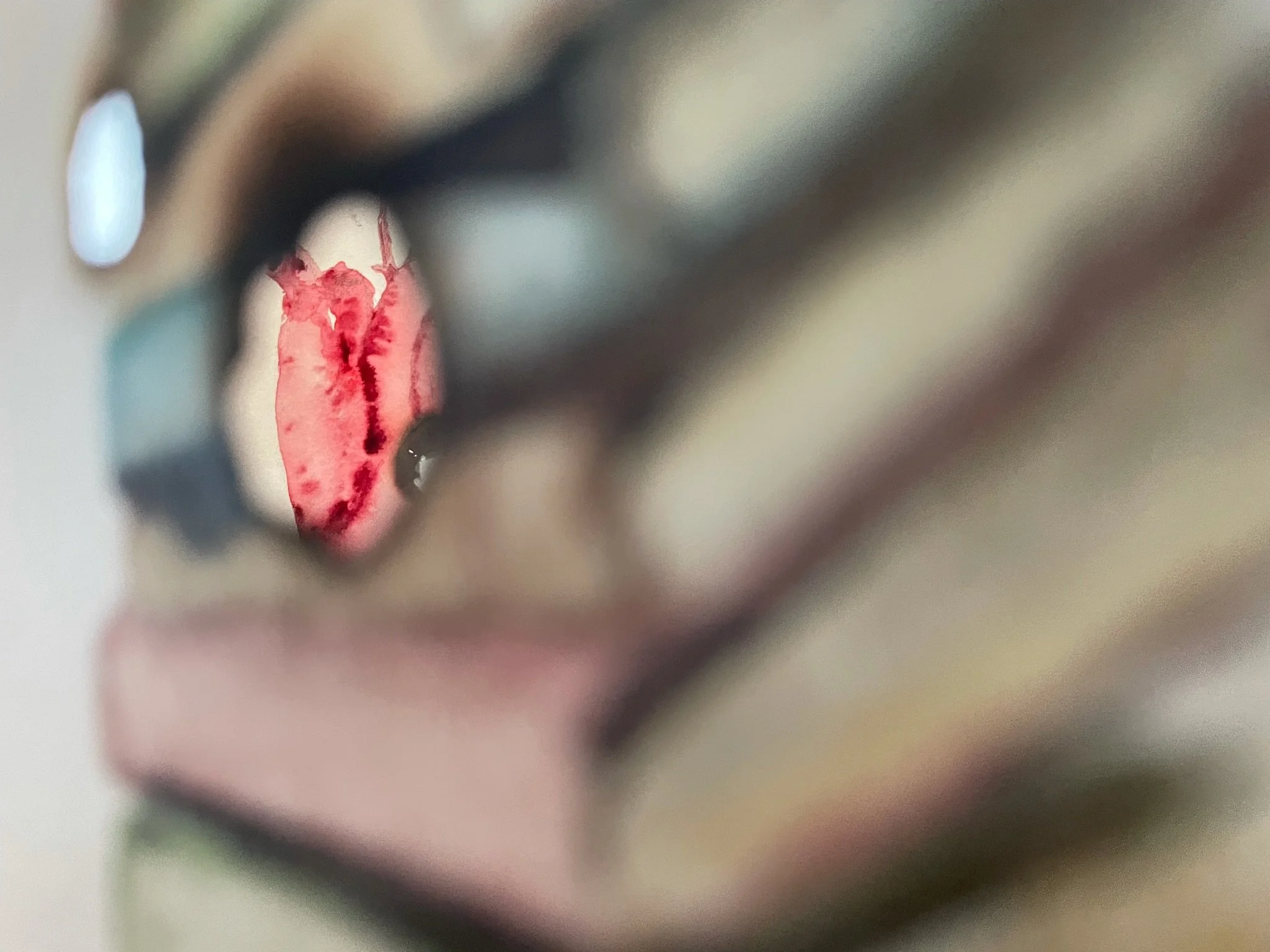
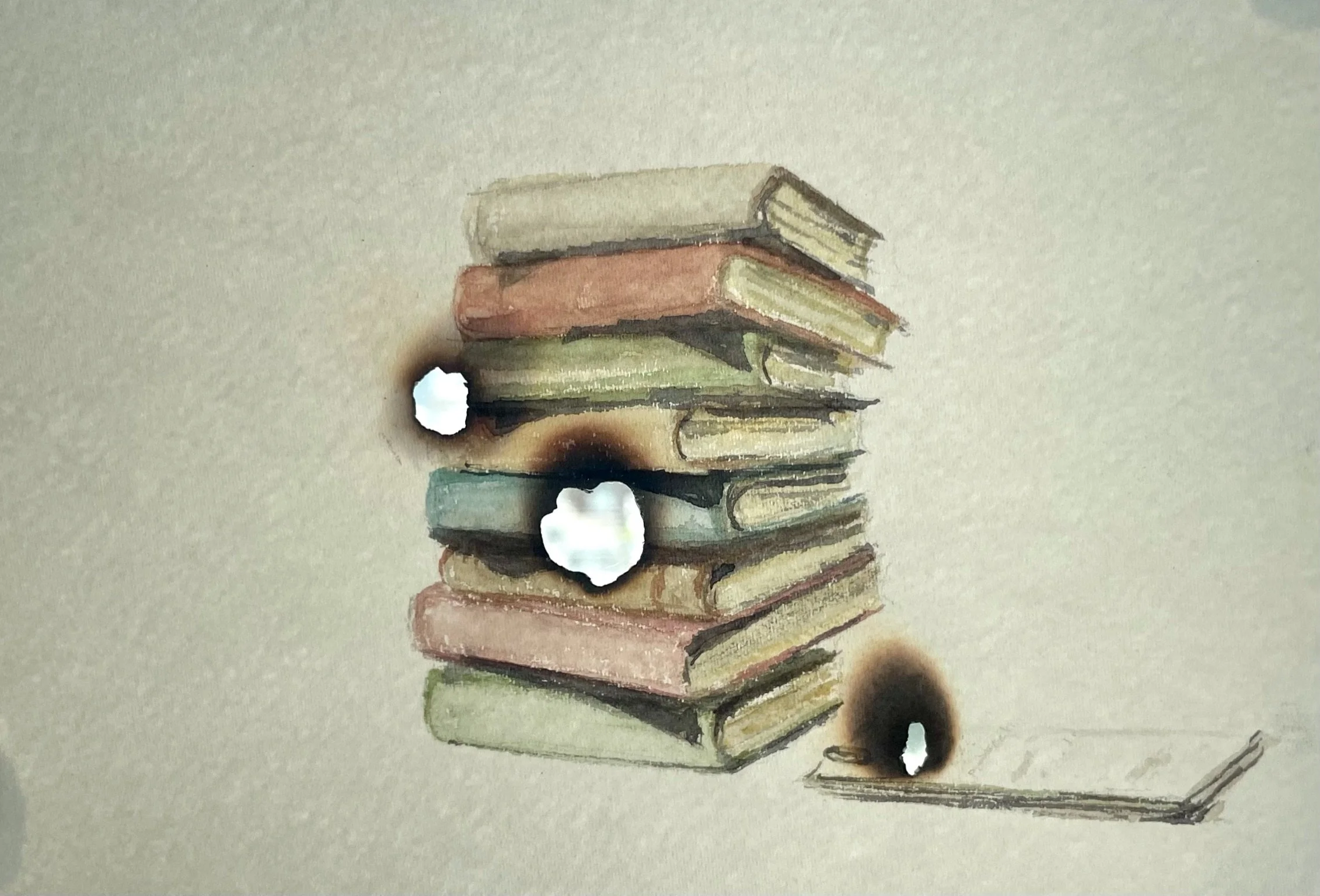
Image from Beaver Bentwood Box by Robin Roberts
Image from Burned Out Again by Carrie Jenkins, photography by Jonathan Ichikawa